|
|
General Horse Information
Feeding
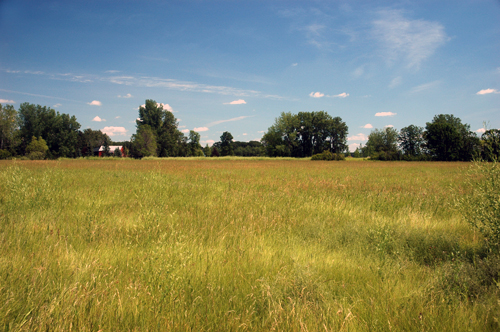
Our horses have access to good forage all the time. We feed hay twice a day, adjusting the
amounts according to the time of year and the behaviour of the horses. Our pastures contain a mixture of
timothy and brome grasses with some alfalfa plants. The presence of the grasses means that the horses
have to use the larger grinding surfaces of their teeth to digest these plants. Their teeth wear evenly in
the process. We test our pasture grasses from time to time to make sure that they are of sufficient quality. We
also fertilize them to make sure that the forage plants are healthy.
 |
 |
 | |
Click to Enlarge |
|
Click to Enlarge |
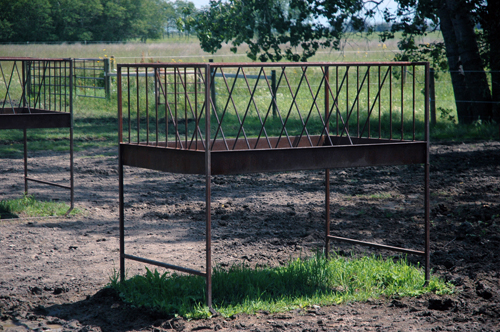
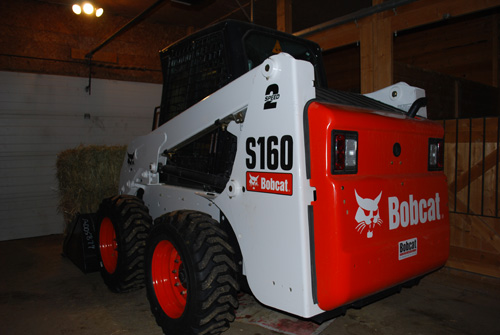
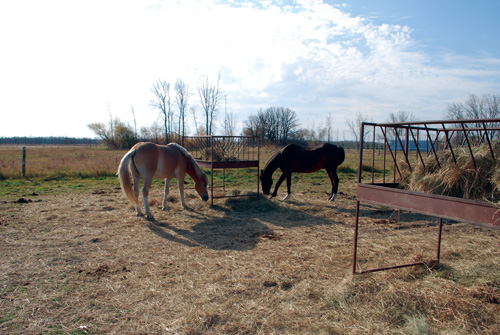
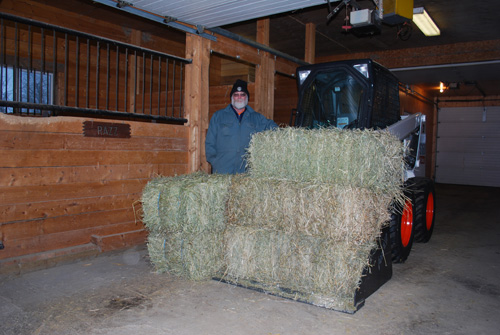
When hay is fed, it is fed out of custom-built hay mangers. A skid steer is used to bring hay to these
feeders.
 |
|
 | |
Click to Enlarge |
|
Click to Enlarge |
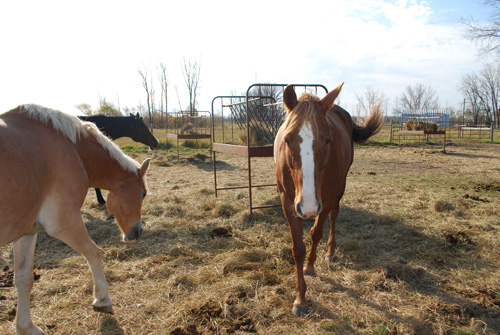
Up to four horses can eat from one feeder. A flat pan prevents the leaves of the forage from falling onto the
ground, into water, mud, sand, snow etc. Feeding horses in mud or sand can lead to sand colic. The leaves
of forage contain two thirds of the energy and three fourths of the protein that a horse needs on a daily
basis. To waste this feed is inefficient. These pans have holes in them that allow rain and melted snow to
drain from them.
 |
|
 | |
Click to Enlarge |
|
Click to Enlarge |
Bars placed at the ends of the feeders prevent a horse from sticking its head into the hay feeder and
becoming trapped or injuring itself if startled by another horse. Feeding horses from these feeders
minimizes parasitic transference among horses.
We do not use large round bales. When horses stick their heads into the round bale they can injure their
eyes and they can be exposed to dust and mould. Large round bales are also very wasteful.
Horses should be able to ingest 1% - 2% of their total body weight in hay or pasture feeding. If they are
exposed to good quality forage, their body weight should be right, their energy level should be good, their
eyes should be bright, and their coats should be shiny.
Horses fed on pastures are rarely fat horses. They will graze almost constantly, feeding around 20 minutes
out of every hour. Horses need protein, energy, mineral, vitamins, fibre, and water. Natural pasture can
provide almost all of these ingredients. Horses are designed by nature to eat a variety of grasses or
forage, on an almost continuous basis. Most digestion in the horse occurs in its large intestines by bacterial
fermentation. The majority of a horses' diet should be pasture/hay.
Customized feeding of an individual horse is not possible because the horses are maintained and fed as a
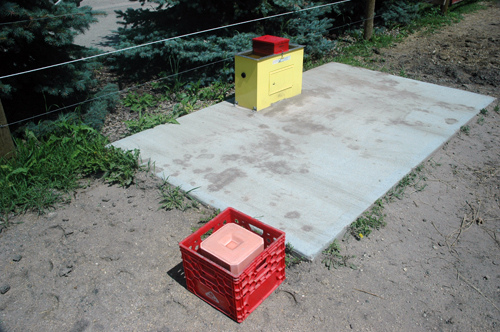
herd. Supplements, however, are fed as needed by the individual owners. Salt blocks are available at all times.
 | |
Click to Enlarge | |

|
|
|
|